Localize your Rails application like a pro

summary
Practical checklist for Rails i18n: use split YAML files and recursive loading so translations stay maintainable; add i18n-debug gem to see Rails’ default lookup tree and where labels come from; prefer lazy lookup and built‑in pluralization (pass count) instead of ad hoc ifs; consider multiple backends or a chain backend (ActiveRecord/Redis + YAML) so marketing can edit text live; localize whole templates with localize views and use L/number helpers for dates, numbers and bytes.
AI-written summary · about
chapters (14)
- 0:00Intro
- 0:18CLOUD Pain Free Rails 66 Deployments
- 2:45The basics
- 5:42Split your .yml files
- 7:57118n-debug gem
- 9:20Default lookup tree
- 11:23Lazy lookup
- 13:51Localized Views
- 15:28partials
- 18:44Pluralization
- 21:11Different backends
- 25:28The chain backend
- 27:24Times, dates and numbers
- 27:35the L function
related talks
 29mFinding Translations: Localization and Internationalization
 20mFinding translations, localisation and internationalisation
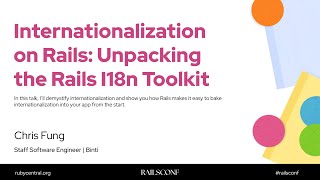 29mInternationalization on Rails: Unpacking the Rails I18n Toolkit
 22mInternationalisation(i18n) & Localisation(l10n)
 31mInternationalizing your App
 08mLocalization for Real-World Use-Cases: Key Learnings from Onboarding Global Brands
 39mThink globally, act locally with i18n on the web
 40mTricks That Rails Didn't Tell You About