Docker-Composing Your Way to a Better Development Environment

summary
Shows how to replace heavyweight VMs with containerized services by building a Django dev stack with a Dockerfile plus a docker-compose.yml that runs Postgres, Redis and a Celery worker; demonstrates mapping source with volumes, using service hostnames (DB), and commands like docker compose up/down/start/stop/logs/run/exec. Notes tradeoffs: faster provisioning and smaller images (Alpine), but slower large test suites and trickier debugging and volume-data persistence on down.
AI-written summary · about
chapters (10)
- 0:00Introduction
- 1:27Challenges with development environments
- 8:57Docker
- 11:49Postgres
- 12:33Docker File
- 13:35Volumes Networks
- 18:42Django App
- 20:55Primer
- 23:27Some caveats
- 27:24Conclusion
related talks
 34mAn Intro to Docker for Djangonauts
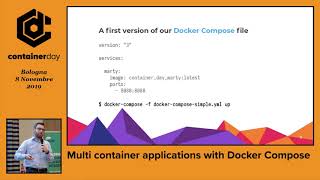 28mMulti-Container Applications with Docker Compose
 40mDeveloping Ruby Applications with Docker
 30mSimplify All the Things with Docker Compose
 47mCreating a containerized Django + React + PostgreSQL...
 44mDocker and the Path to a Better Staging Environment
 01h 02mDocker for Data Science: Reproducibility and Deployment
 13mBuilding reproducible dev environments with Docker