Hot Water Leak Detection Using Variational Autoencoder Model

summary
SoCalGas needs to distinguish hot water leaks from other abnormal gas usage and applies a Variational Autoencoder to screen hourly meter profiles rather than rely on manual inspection. The dataset contains about 3.39 billion hourly reads and has very few labels, so random forests and MLPs hit only about 72% and 62% accuracy respectively. A semi‑supervised VAE extracts latent features that improve detection on scarce labels; models are promising but not yet productionized.
AI-written summary · about
chapters (12)
- 0:00Hot water leak detection intro
- 1:12Early leak detection importance
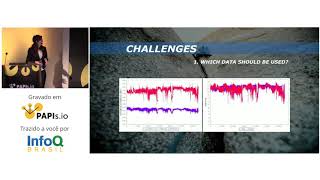
- 4:10Data sources and challenges
- 7:46Why ML failed
- 11:22What is a VAE
- 13:33Semi-supervised learning with VAEs
- 23:01VAE vs deterministic autoencoders
- 23:23Leak detection approaches tested
- 27:03Latent space classification results
- 28:53Semi-supervised learning progress
- 29:59Conclusion and future work
- 30:40Q&A
related talks
 24mLeak Detection System using Machine Learning Techniques
 28mAnomaly Detection using Autoencoders
 23mDataEngBytes 2023 - MEL-T3-01 - Rajath Vanikul
 29mAI-Powered Anomaly Detection in Cloud Data Pipelines
 28mPopulation Anomaly Detection with PyTorch
 45mAnomaly detection with TensorFlow
 17mDetecting anomalous sequences using text processing methods
 14mMinder: Faulty Machine Detection for Large-scale Distributed Model Training