Python at City Scale
summary
Short technical deep dive showing concrete results: Predicting Displacement using Scikit Learn and Pandas yields a model that flags Ellis Act buildings for outreach and helps quadruple audit hit‑rate to about 50%; Counting Bicyclists and Pedestrians with Machine Vision is a custom‑trained detector deployed to AWS that turns 2 years of work into continuous counts from old traffic cameras; Scaling City Data Systems with Airflow ingests provider APIs for the open Mobility Data Specification, stores no PII, triggers 24‑hour scooter removal workflows and compliance alerts.
AI-written summary · about
chapters (19)
- 0:00Python in city government
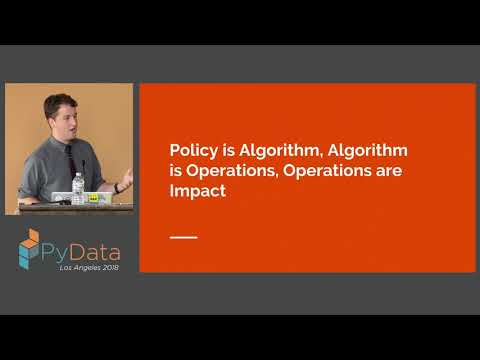
- 2:55Policy vs operations in data
- 8:56Earthquake early warning systems
- 13:14Pedestrian and bike counting
- 18:16Scooter and bike-share data in LA
- 20:41Mobility Data Specification
- 24:50Career in public service
- 25:36Q&A: Government time scales
- 28:49Q&A: API mandates for services
- 30:14Q&A: Institutionalizing data science
- 31:39Q&A: Overcoming technical illiteracy
- 32:42Q&A: Prioritizing city data problems
- 33:25Q&A: Open data portals
- 34:06Q&A: Interpretable tax fraud models
- 35:10Q&A: City collaboration
- 37:16Q&A: Government hiring processes
- 38:42Q&A: Civic tech contributions
- 40:49Q&A: Leadership changes
- 41:53Q&A: Public API access
related talks
 28mAutomate Your City Data With Python
 18mAutomate Your City Data with Python
 45mMining dockless bikeshare and dockless scootershare trip data
 31mMonitoring Displacement Crises with Python
 26mFrom Data to Decision: Monitoring and Improving Water Networks using AI/ML
 41mAnalysing and predicting inner-city parking space occupancy
 22mPython Applications in Infrastructure Planning and Civil Engineering
 11mScaling the Urban Forest: An Integrated Framework for Managing Cities by Fusing Raster(…)