Hey, Python-Web-Community! What's going on?
summary
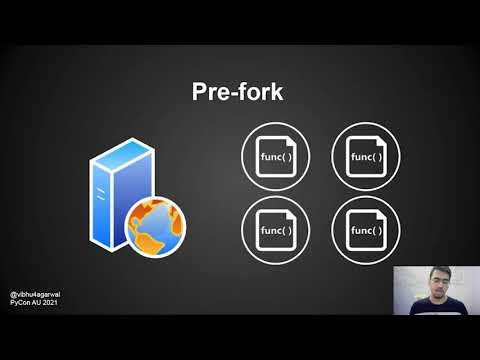
Explains how Python web pieces actually connect: CGI versus pre-fork workers (fork cost, worker pool), WSGI’s single-call app and server separation, and ASGI’s scope/receive/send model enabling async concurrency. Names concrete stacks — Django, Flask, FastAPI, Django Channels — and servers: gunicorn and uwicorn uvicorn Daphne Hypercorn — and shows where routing, middleware, templates and process management live, what overheads drop with async, and when a server or framework change yields measurable latency or concurrency gains.
AI-written summary · about
chapters (20)
- 0:00Intro
- 2:14Static Websites
- 3:13Static and Dynamic Websites?
- 4:16Protocol/Application Server
- 5:50Common Gateway Interface (CGI)
- 7:21Pre-fork
- 8:04Process Management
- 8:27The External Script
- 8:40Template Engine
- 9:37Minimal Example
- 11:21Django Middlewares
- 12:47Web Server Gateway Interface
- 16:29Workers
- 16:58WSGI World
- 20:43Asynchronous Server Gateway Interface
- 21:19ASGI Connection
- 23:24Asynchronous Web Frameworks
- 25:36ASGI Servers
- 26:43ASGI World
- 29:01Resources
related talks
 18mFrom WSGI to ASGI - Django 3.0
 24mA Brief History of Python Web Frameworks
 31mInside ASGI The Engine Behind Modern Python Web Frameworks
 55mKeynote: The Natural State of Computers
 26mInside web framework: intro to the ASGI spec, middleware and apps
 32mSync vs. Async in Python: Tools, Benchmarks, and ASGI/WSGI Explained
 26mUsing Django as a Micro-Framework: Hacking on the HTTP handlers..
 45mWebSockets: Intro to Messaging