NetScatter: Enabling Large-Scale Backscatter Networks

summary
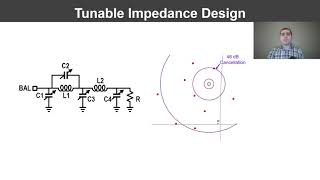
First protocol that decodes hundreds of simultaneous backscatter radios by assigning distributed chirp/cyclic-shift coding so each device maps to an FFT bin and the receiver uses a single FFT decode to demodulate everyone below the noise floor. Practical fixes: avoid timing jitter by spacing cyclic shifts (trading 512 theoretical bins down to ~56 usable slots), solve near–far by clustering similar RSS and switching between three impedances (0, −4, −10 dB). Built a 256-node testbed with a USRP access point and discrete backscatter devices and shows 14–62× throughput and 15–67× latency improvements using 500 kHz.
AI-written summary · about
chapters (16)
- 0:00Intro
- 0:22Backscatter Communication
- 1:08Grand Challenge: Long Range Backscatter Network
- 2:11Outline
- 3:42Drawbacks of Chirp Spread Spectrum
- 4:26Our Key Observation
- 6:01Network of Hundred Backscatter Devices
- 7:37Practical Issues: Timing Synchronization
- 8:52Timing Synchronization Solution
- 9:28Practical Issues: Near-Far Problem
- 10:41Solution: Power Adaptation Algorithm
- 11:54Implementation
- 12:17Evaluation: Large-Scale Deployment
- 12:56Evaluation: Network PHY Data-Rate
- 14:35Evaluation: Network latency
- 14:57NetScatter
related talks
 12mSyncScatter: Enabling WiFi like synchronization and range for WiFi backscatter
 13mVerification and Redesign of OFDM Backscatter
 19mVMscatter: A Versatile MIMO Backscatter
 06mRelacks: Reliable Backscatter Communication in Indoor Environments
 13mLeakyScatter: A Frequency-Agile Directional Backscatter Network Above 100 GHz
 19mOrthcatter: High-throughput In-band OFDM Backscatter with Over-the-Air Code Division
 12mSimplifying Backscatter Deployment: Full-Duplex LoRa Backscatter
 25mPerformance Evaluation of MIMO Techniques With an SDR-Based Prototype