Securing your dependencies

summary
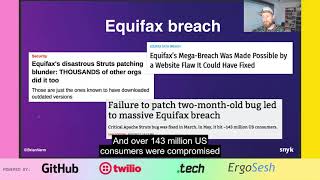
Demo runs a deliberately vulnerable Node.js app in Docker and triggers arbitrary code execution via mathjs eval; a Snyk-like scan reports 4 high and 3 medium vulnerabilities and automatically opens a pull request to upgrade and PR generated the vulnerable package, which removes the exploit. Notes that typical web apps are about 90% components and walks the Equifax timeline: an Apache Struts CVE is disclosed in Feb 2017, patched, then exploited in May, leading to a massive breach. Recommends automated SCA in CI/CD and production.
AI-written summary · about
chapters (9)
- 0:00Introduction and context
- 2:08The risk of components
- 4:20Real-world analogies
- 6:43The Equifax case study
- 11:01Defining SCA
- 14:04Vulnerability demonstration
- 19:16Remediation via automation
- 26:13Best practices for security
- 31:34Q&A and conclusion
related talks
 24mStrangerDanger: Finding Security Vulnerabilities Before They Find You!
 41mLive Hacking: Breaking into Your Web App
 27mStrangerDanger: Finding Security Vulnerabilities Before They Find You
 14mStranger Danger: Tracking Vulnerabilities in Your Third Party Code
 46mLive hacking: Breaking into your Java web app
 35mStrangerDanger: Finding Security Vulnerabilities Before They Find You!
 52mDevSecOps
 18mLive Exploiting Your Open Source Dependencies