From Theory to Practice - Threshold Cryptography

summary
Claims a practical threshold-crypto stack that trades liveness for secrecy by splitting fault bounds: security holds up to just under 1/2 corrupted, while liveness is guaranteed only up to a lower tunable bound (example used: <1/4), so the system requires 3/4 signatures (N minus liveness threshold) to advance. Uses Shamir-style secret sharing, a PKI to encrypt per-party shares with publicly verifiable checks so sleeping nodes can later recover, sits on an unmodified BFT Smart replication layer, and ships as MIT open-source supporting DKG, threshold signing, OPRFs and RSA blind signing.
AI-written summary · about
chapters (12)
- 0:00Intro
- 14:55Recent Interest
- 18:53Solutions
- 21:47Theory Meets Reality
- 23:11Do We Care
- 25:28Bridge the Gap
- 26:01The Problem
- 28:29Lower Bound
- 30:50BFD Protocol
- 33:45Example
- 45:03Distributed Key Generation
- 49:46Secret Sharing
related talks
 34mCryptographic Vulnerabilities in Threshold Wallets
 49mDigital Signatures
 15mInside Iceberg: The (Secret) Leap Forward in Bitcoin's Cryptography
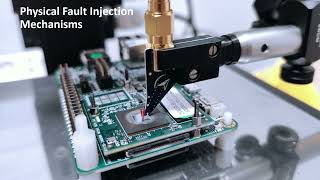 47mThreshold Signatures and Fault Attacks
 01h 14mDecentralized Cryptography: A Distant Dream or an Immediate Possibility?
 46mAchieving Quantum Readiness: A Comprehensive Approach
 46mSignatures 1
 47mSignatures 2