Function Composition in a Serverless World - Erwin van Eyk & Timirah James, Platform9

summary
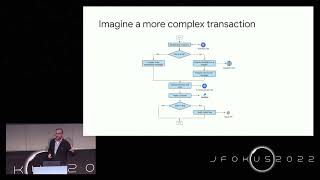
Demo app sends a photo to a third‑party image recognition API then translates the first tag to Danish, and three composition patterns are compared with live demos: merging at source (no serialization but no independent scaling), chaining via HTTP (simple but serial, adds latency and retry burden), and a coordinator function (centralized control but idle wait time); then event-driven via message queues like Kafka and image-recognition -> translate pipelines, and Fission workflows (event‑sourced engine, scheduler, reduced cold starts, easier monitoring and upgrades) with tradeoffs on latency, fault tolerance, and operational complexity.
AI-written summary · about
chapters (21)
- 0:00Introduction
- 1:31What is Function Composition
- 1:58Importance of Function Composition
- 2:29Example Use Case
- 2:54Overview
- 3:38Combining Functions
- 4:29Pros Cons
- 5:56Direct Chaining
- 6:21Nested Functions
- 6:49Cons
- 7:51Coordinator Functions
- 10:04Idle Time
- 11:38Example
- 12:14The Process
- 14:43Workflows
- 16:41Fast Focused Workflows
- 17:37fission workflows
- 18:43demo
- 21:12pros
- 23:12recap
- 24:29the big question
related talks
 52mServerless landscape beyond functions
 50mChoreography vs Orchestration in serverless microservices
 45mServerless landscape beyond functions
 38mChoreography vs Orchestration in serverless microservices
 35mIt’s Easy to Say Serverless
 42mServerless Landscape Beyond Functions
 40mCloud architecture patterns, how to implement them in a serverless way
 48mServerless beyond functions