The Past, Present & Future of Programming Languages

summary
Argues that language change is slow: mainstream toolchains and surveys show the top 10 are >2/3 of usage and the top 5 hold ~55%, most popular languages predate 2000, only a handful of 21st‑century entries break in. Notes technical specifics: Fortran proved compiler parity, Algol 68 introduced expression orientation and block structure, co‑routines appear in early simulation languages, and spreadsheets (Excel) act as the world’s largest functional platform. Claims LLMs amplify historical data and therefore will slow, not accelerate, language turnover.
AI-written summary · about
chapters (21)
- 0:00Intro
- 2:42Past, present & future
- 6:07John Backus: Fortran
- 8:54Robert W. Floyd: Paradigms
- 9:08Prog. languages appear to be in trouble
- 10:10Prog. language rankings
- 16:22Top prog. languages 2024
- 17:22Bjarne Stroustrup
- 17:45Prog. languages chronologically ordered
- 21:27Algol 68
- 24:16Edsger Dijkstra
- 29:08Subroutines
- 33:14Block structure
- 38:14FP languages
- 40:48Pipelines
- 42:28Lambdas
- 47:18LISP & Machine Learning
- 51:55Prog. language evolution
- 54:17Java
- 55:06Betterigde's law
- 55:36Outro
related talks
 01h 30mThe Past, Present and Future of Programming Languages
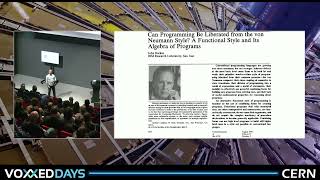 52mThe Past, Present and Future of Programming Languages
 01h 10mThe Past, Present and Future of Programming Languages
 50mThe Past, Present and Future of Programming Languages
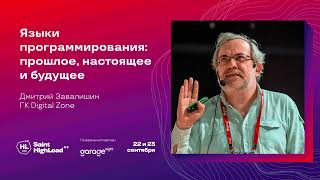 52mProgramming Languages: Past, Present and Future
 10mpart3 – Ted Neward
 57mWhy Programming Languages Matter
 48mTalking to Machines: The History and Future of Programming Languages