GitLab: The Asynchronous Enterprise

summary
GitLab claims an all‑remote model scales: growth from 9 to 1,200 team members in 65 countries with zero offices and a near-$3B valuation. Collaboration runs through merge requests, a public handbook stored in source control (about a 3,000‑page public handbook), Slack/Zoom with recorded meetings, and GitLab Runner for CI. Decisions assign a directly responsible individual, use measurable goals, favor minimal viable changes, and prioritize transparency and trust to reduce coordination overhead and speed release cycle time.
AI-written summary · about
chapters (12)
- 0:00Intro
- 0:22GitLab's story
- 5:54The (case for) asynchronous enterprise
- 6:46Release cycle time is critical
- 7:51Remote is part of the solution
- 10:13Challenges
- 12:15Values
- 12:36Iteration
- 13:42Transparency
- 15:08Efficiency
- 16:20Communication guidelines
- 17:34Trust
related talks
 25mThe Asynchronous Enterprise
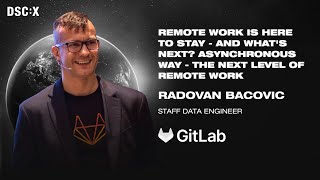 37mAsynchronous Work: The Next Phase of Remote Work
 13mSid Sijbrandij, GitLab | | GitLab Commit 2020
 13mDarren Murph, GitLab | GitLab Commit 2020
 29mEveryone Can Contribute
 19mAll-Remote UX at Scale
 29mScaling Across the Enterprise
 21mDriving Cultural Change to Improve Software Development and CI/CD