The evolution of storage on Linux

summary
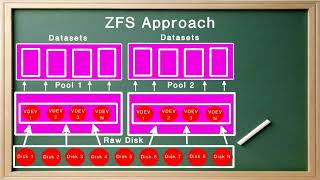
A concise checklist: Linux accumulates 40+ filesystems in the kernel; early limits like Minix 64 MB and EXT1’s 2 GB give way to EXT2/3/4, XFS and JFS that push to terabytes; journaling via jbd/journaling turns multi‑hour fsck into minutes; logical volume flexibility comes from device-mapper and LVM2 with thin provisioning; dm‑cache uses a flash device as a working cache and actually speeds real workloads; cluster solutions (OCFS2, GFS), DRBD replication and ZFS/Btrfs provide distributed, fault‑tolerant storage.
AI-written summary · about
chapters (25)
- 0:00Introduction
- 5:28Conclusions
- 12:35History
- 14:10Xscape
- 15:37VFS
- 16:47What is VFS
- 17:40Extended File System
- 21:26XD2 based
- 22:15Fat MSDOS
- 23:16DM Tools
- 24:16NTFS
- 25:30NTFS TNG
- 26:37Filesystem journaling
- 27:10filesystem check
- 28:46parallel file systems
- 31:08jbd
- 33:08IBM
- 35:07ReiserFS
- 37:58SGI XFS
- 47:27Storage Services
- 49:29XT
- 50:52ButterFS
- 52:16ZFS
- 53:07DRBD
- 54:26Cluster File Systems