What it's really like building RESTful APIs with Django

summary
Rebuild of Lyst’s mobile API uses Django and Django REST framework to replace an RPC style API with explicit REST resources, serializers and computed fields such as serializer method field to split a cart model into multiple resources. Defaults force admin-only permissions, production uses OAuth2 for per-user app tokens, and checkout runs asynchronously by POSTing to a /checkout subresource returning 202 Accepted with callback URL, with copyable curl examples and a getting-started auth guide.
AI-written summary · about
chapters (21)
- 0:00Introduction
- 0:30About me
- 1:24Pokemon API
- 1:52Star Wars API
- 2:16List API
- 3:33Old API
- 6:57What we learnt
- 9:15Resources
- 9:58The Card
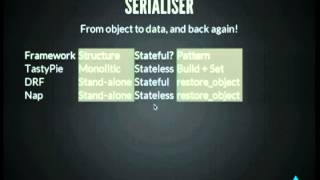
- 10:39serializes
- 12:46REST frameworks
- 14:17Permissions
- 15:39Authentication
- 16:22Django Off Toolkit
- 17:40HTTP
- 19:19HTTP patch
- 20:32Synchronization
- 21:29Closing the connection
- 22:42Documentation
- 23:55Getting Started Guide
- 25:25Outro
related talks
 21mBuilding Powerful APIs with Django, Django Rest Framework, and OpenAPI
 25mWrite an API for Almost Anything (or The Amazing Power and Flexibility of Django Rest Framework)
 27mDjango REST Framework: Taking your API to the next level
 26mDjango, REST and OpenAPI - a gentle introduction
 30mA state of REST.
 33mDjango REST Framework: Moving Past the Tutorial to Production
 41mProduction Django: Building a Highly Scalable, Secure Django Site
 23mDjango REST API - So easy you can learn it in 25 minutes