C++ for Embedded Development

summary
Argues C++ is practical on constrained devices by naming compiler flags, library choices and measured costs: use -fno-exceptions and -fno-rtti to avoid unwanted overhead, choose GCC or Clang and libstdc++ vs libc++ by license, and prefer RAII/unique_ptr over manual goto cleanup. Shows a kernel-like function rewritten with exceptions and RAII increasing binary data by only 16 bytes plus an unwind table, and demonstrates performance/size wins from vector vs linked list and modern features (lambdas, move semantics) for safer, efficient embedded code.
AI-written summary · about
chapters (17)
- 0:00Intro
- 5:14The Question
- 6:57C is more complex
- 8:03C is designed around you
- 11:30C hides things
- 14:22Using templates
- 16:28Compilers
- 21:25Missing Prototypes
- 24:00Casting
- 25:46Void pointers
- 27:21Cast operators
- 29:41Classes
- 32:17Overloads
- 34:39Linux Kernel
- 36:37Resource Acquisition
- 40:33Containers
- 46:56Exceptions
related talks
 01h 11mC++ in the World of Embedded Systems
 01h 08mKeynote: What can C++ do for embedded systems developers?
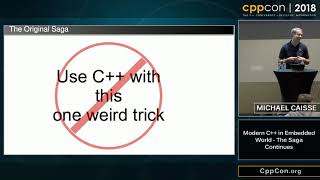 01h 09m“Modern C++ in Embedded Systems - The Saga Continues”
 01h 00mDealing with Embedded Limitations
 01h 31mBetter embedded library interfaces with modern C++
 01h 00mModern Software Needs Embedded Modern C++ Programming
 01h 23mC++ Exceptions Reduce Firmware Code Size
 05mModern C++ in Embedded OS Dev