Integrating Language Engineering into the Software Development Process
summary
Walks through concrete steps for adding DSLs to normal dev workflows: start with quick playground prototypes so users give fast feedback, author grammars that produce an AS (JSON/EMF XMI) and write generators that emit Java or TypeScript, add unit and acceptance tests against the AS, and extend with handwritten code when workbench defaults lack features. Compares tool choices like Xtext and Langium, highlights using the language server protocol for editor integration, and stresses modularization and performance as projects grow.
AI-written summary · about
chapters (10)
- 0:00DSLs and language engineering
- 5:04Language workbenches in development
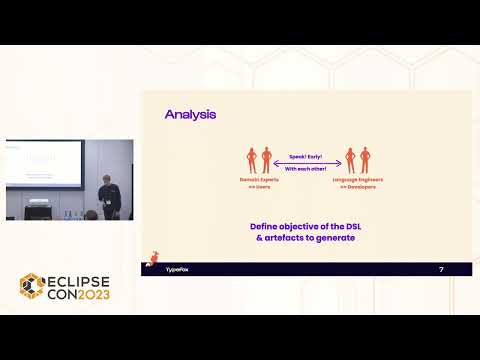
- 8:15Prototyping DSLs with feedback
- 13:25Benefits of language workbenches
- 16:37Testing DSLs for quality
- 18:24Iterative feedback in DSL development
- 20:56Extending language workbenches
- 22:19DSL scalability and integration
- 24:29DSL maintenance costs
- 25:57Summary and call to action
related talks
 53mDeveloping DSLs in a pragmatic way
 07mNew Ideas: Automated Engineering of Metamorphic Testing Environments for Domain-Specific Languages
 53mDomain Specifc Languages
 01h 01mChallenges in the Design and Implementation of Teaching Languages for EDSLs
 28mModern language engineering with Langium
 15mExample-Driven Software Language Engineering
 37mTextual and Graphical Languages for the Cloud Era
 26mDSLs in the cloud with Langium and Theia