Rethinking UI: Imperative to Declarative

summary
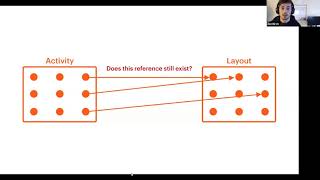
Modern UI shifts from imperative XML/storyboards to component functions: Jetpack Compose (alpha) plus SwiftUI and React let you declare UI from a state object, cut boilerplate, and use unidirectional data flow so components recompose when state changes. Frameworks perform diffs/partial updates (virtual DOM style) and offer a lazy list/recycler replacement rather than full redraws. Recommendation is to move screen state into view models now so migration is mostly swapping views; Compose targets stability within about a year.
AI-written summary · about
chapters (13)
- 0:00Introduction to talk
- 1:40Current imperative UI challenges
- 6:11What is declarative programming
- 7:33Declarative UI frameworks overview
- 10:12Problems with modern imperative UI
- 13:05Imperative vs declarative state handling
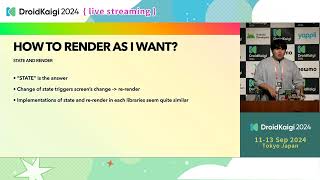
- 15:33Understanding state in declarative UI
- 17:21Unidirectional data flow explained
- 18:44State-driven UI composition
- 20:50Component tree updates in declarative UI
- 22:55Performance trade-offs and optimizations
- 25:27Preparing apps for Jetpack Compose
- 28:55Q&A session
related talks
 40mRethinking UI: Imperative to Declarative
 01h 10mThe Evolution of Declarative UI Frameworks: From Dinosaurs to Jetpack Compose
 26mReactive Declarative UI as Code - Trend and Healthy competition
 38mEssential concepts to know when learning Declarative UI
 33mThe Evolution of Android UI Development. A Journey From XML to Compose. What’s next ?
 39mRe-Compose your UI: building an atomic design library
 44mUnleashing the Power of Jetpack Compose: Revolutionizing Android UI Development
 49mBuilding an Android UI using declarative programming in Jetpack Compose