Engineering Leadership Through a Social Network Lens

summary
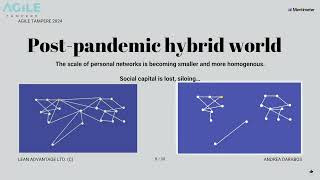
Scripts on GitHub pull GitHub interactions into a CSV edge list and run every two weeks to compute nodes, density and mean node connectivity; Neo4j plus LLMs act as a quick “second brain.” Adding four then three engineers produces a visible connectivity plummet; buddy systems, round‑robins, questions‑of‑the‑day, mob sessions and junior-only task forces raise participation and within 1.5 months seniority signals blur. Manager bottlenecks ease by shifting accountability to outcomes. Ethics: share data and never use network metrics alone for performance.
AI-written summary · about
chapters (13)
- 0:00Introduction
- 1:10What is social network analysis
- 2:54Why it matters for leaders
- 3:56Methodology for networks
- 6:06Tracking metrics over time
- 7:11Mitigating onboarding disruptions
- 9:41Addressing team silos
- 11:46Breaking seniority bottlenecks
- 15:13Recognizing manager bottlenecks
- 18:27Ethics of AI-enhanced analysis
- 20:37Personal ethical principles
- 21:46Contextual biases in data
- 23:28Conclusion
related talks
 33m The Networked Collaborator
 31mData-driven Leadership
 34mAn Engineering Team Where Everyone is a Leader
 49mNet Positive Development
 33mAn Engineering Team Where Everyone is a Leader
 19mBuilding and Motivating Engineering Teams
 26mEngineering metrics, minus the creepiness
 53mScaling Agile: The Small-is-Beautiful of Hubs