Trash Talk - Exploring the JVM memory management

summary
Covers how the JVM traces, reclaims and compacts memory, with concrete tradeoffs: stop-the-world pauses for simple collectors, most objects die young motivating the generational Eden/Survivor/Tenured design, and region-based G1 versus low-latency collectors like ZGC/Shenandoah/C4. Shows which collectors are parallel, concurrent or non-moving, how barriers and forwarding pointers enable concurrent copying, and when Epsilon or Zing/C4 make sense (huge heaps, lots of CPU) versus Serial/Parallel for tiny nodes.
AI-written summary · about
chapters (25)
- 0:00Introduction to session
- 0:23Why JVM garbage collection matters
- 1:46Heap and stack basics
- 3:55Understanding garbage in JVM
- 5:05Automatic memory management explained
- 6:30Stop the world pauses
- 7:34Mark and sweep collector
- 10:00Mark and compact collector
- 11:49Copy collector overview
- 13:38Generational garbage collection
- 18:37Intergenerational references
- 20:00Concurrent marking challenges
- 21:26Barriers in garbage collection
- 24:19Concurrent copying techniques
- 27:12JVM garbage collectors overview
- 27:56Serial garbage collector
- 29:43Parallel garbage collector
- 31:09CMS collector history
- 32:54G1 garbage collector
- 37:14Epsilon non-collector
- 39:23Shenandoah collector
- 41:13ZGC collector features
- 43:25C4 continuous compacting
- 48:00Choosing the right collector
- 50:13Q&A and closing
related talks
 50mTrash Talk - Exploring the JVM memory management
 49mTrash Talk - Exploring the memory management in the JVM
 46mTrash Talk - Exploring the Memory Management in the JVM
 49mTrash Talk: Exploring the JVM memory management
 50mTrash Talk - Exploring the JVM memory system
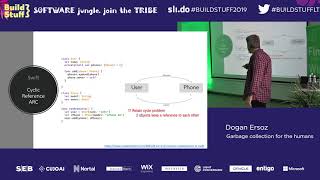 52mGarbage collection for the humans
 16mGarbage Collectors: Battle Royale
 01h 32mUnderstanding Java Garbage Collection and what you can do about it