A Quantum Computing Talk Without Qubits

summary
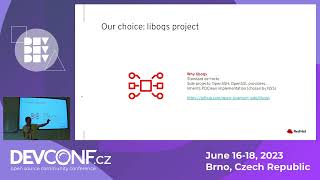
RHEL 10 and Fedora already package NIST‑approved post‑quantum algorithms — ML-KEM and ML-DSA — into OpenSSL/GnuTLS and a single crypto‑policy switch toggles a Quantum Ready profile; an OpenShift Kiskit operator can spin up a Jupyter notebook on Kubernetes and route jobs to real QPUs (the operator is usable but not fully maintained). Open Quantum Safe / liboqs supplies container images and OpenSSL tooling to generate larger post‑quantum keys (demo prints “shared secrets match”), and warns of harvest‑now, decrypt‑later attacks.
AI-written summary · about
chapters (10)
- 0:00Quantum computing intro
- 3:16Quantum for engineers
- 12:10Quantum and software risks
- 16:42Quantum software stack
- 20:36Post-quantum cryptography
- 25:19Harvest now decrypt later
- 28:05Shor's algorithm risks
- 31:14Open Quantum Safe demo
- 34:32KisKit simulator
- 37:17Closing & Q&A
related talks
 17mPostquantum algorithms in Fedora now and soon
 34mQuantum-Ready Kubernetes: How Do We Get There?
 05mLightning Talk: Building Quantum-Safe Applications
 34mQuantum-Ready Kubernetes: How Do We Get There?
 27mPost-Quantum Cryptography
 47mQuantum-Safe TLS in Practice With Open Quantum Safe & OpenSSL 3
 30mNavigating the Quantum Readiness Journey: Securing Kubernetes with Quantum-Resis...
 32mPQC in OpenSSL Library