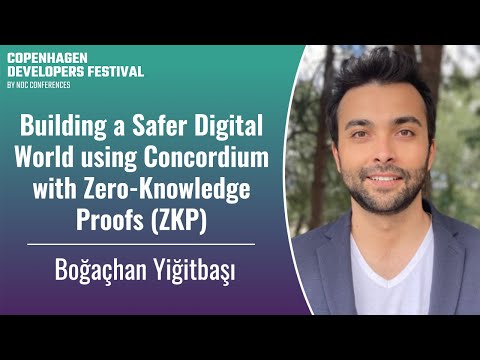
Building a Safer Digital World using Concordium with Zero-Knowledge Proofs
summary
Concordium combines an on‑chain identity layer with zero‑knowledge proofs so wallets can emit verifiable proofs (age, license, legal entity) without revealing raw data; smart contracts are written in Rust and the chain finalizes blocks in 2.1–2.2s. Privacy tech used includes Sigma protocols for interactive proofs and bulletproofs for range/age checks; demo shows a browser wallet generating an age‑over‑18 proof and letting the user into a site. Identity disclosure exists for court‑ordered de‑anonymization.
AI-written summary · about
chapters (13)
- 0:00Concordium and blockchain privacy
- 1:29Crypto Anarchist and Cypherpunk manifestos
- 5:45Discrete logarithm and key exchange
- 11:03Blockchain basics and Bitcoin
- 14:32Zero-knowledge proofs history and Alibaba cave
- 18:48Zero-knowledge proofs in blockchain and scalability
- 21:19Sigma protocol deep dive
- 24:54Bullet proofs for age verification
- 26:41How Concordium works
- 29:07Concordium’s identity layer
- 34:44Live demo age verification with ZK proofs
- 37:32Compliant apps with Concordium’s ID layer
- 38:44Q&A
related talks
 44mZero-Knowledge Proofs: Simultaneously ensuring integrity and privacy
 21mZero-Knowledge Proofs and Self Sovereign Identity
 01h 26mPanel Discussion: The Challenges and Best Practices of Deploying Zero-Knowledge Proofs
 17mThe Privacy Paradox: Merging Confidentiality & Compliance in Finance
 30mPractical Zero Knowledge Proofs
 26mApplications of Zero Knowledge Proofs in the Banking Industry
 13mConfidential Transactions with Zero Knowledge Proof in Trusted Execution Environments
 26mZKP for Audits of Unsolicited Consumer Communication