Wild West's End

summary
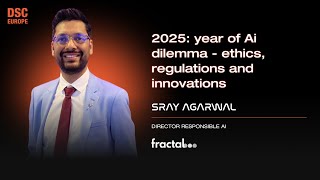
Argues that Responsible AI shifts from Wild West to enforceable practice with concrete measures: EU‑style AI auditors and pre‑market audits, mandated incident reporting and fines for high‑risk systems, and company internal committees that can block projects. Cites hundreds of millions of ChatGPT users, executives who rate ethics important (≈90%) but only ~25% act, and real-world tensions between OpenAI/Microsoft and Google. Flags risks from open source LLMs, prompt injection and jailbreaks, recommends technical guardrails like Constitutional AI and runtime filters plus legal bans on uses such as social‑credit and distant biometric surveillance.
AI-written summary · about
chapters (16)
- 0:00Introduction
- 1:05AI responsibility debate
- 9:38Great responsibility
- 14:10Responsible AI officers
- 19:57Regulation as practice
- 26:27Trusting institutions
- 34:22Global AI regulation
- 37:37AI risks in elections
- 38:40Ethical AI hopes
- 41:09Generative AI ethics
- 43:19Guardrails and bans
- 48:18Central Europe AI risks
- 50:04AI education and awareness
- 50:46Global AI ethics convergence
- 51:31Polarization from algorithms
- 52:12Closing and Q&A
related talks
 34mResponsible AI: The Key to Ethical, Safe and Inclusive Software Development
 24m2025: year of Ai dilemma - ethics, regulations and innovations
 13mAI - Out of Control
 17mAI Law & Ethics: developing responsible AI systems
 23mThe AI Dilemma — Steering towards a More Humane Future
 11mReimagining responsible tech for the era of generative AI
 36mResponsible AI: In Theory, Practice, and Policies
 31mPanel: Navigating the AI Policy Landscape