Walking Around The Quest for lost Gameplay
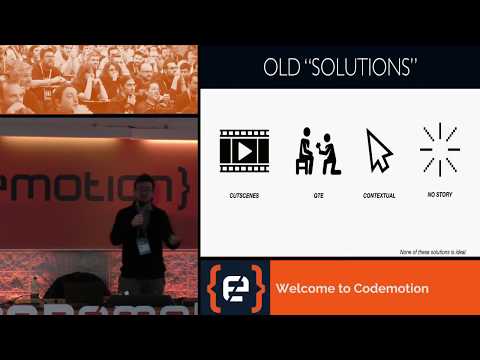
summary
Compares classic gameplay (jump, shoot, change variables) with a newer strand where actions matter for what they mean not what they achieve, arguing that player agency shifts from changing systems to inhabiting relationships. Cites sales: Firewatch ~1.5M on Steam and Gone Home ~2M as proof walking experiences sell. Describes three builds: an early two-character puzzle platformer whose mechanics mirror a relationship, a Kinect puzzle prototype that fails in practice, and Last Day of June (with Stephen Wilson) — a grief-driven narrative that uses small interactions to convey emotion, not challenge, advocating meaning over mechanics within the walking simulator genre.
AI-written summary · about
chapters (12)
- 0:00Introduction and background
- 3:09Trailer for Last Day of June
- 4:05What are walking simulators?
- 6:33Traditional gameplay and mechanics
- 10:22Player agency in walking simulators
- 12:28Challenges of storytelling in games
- 17:30Traditional games and narrative issues
- 19:35Walking simulators and meaningful choices
- 22:41Narrative systems beyond variables
- 27:10Meaning vs. achievement in games
- 28:55Alternative storytelling in traditional games
- 31:10Q&A session
related talks
 44mChildren of a lesser God
 58mExperience, Agency and Authorship: The Evolving Face of Story-Driven Game Design
 59mPragmatic & Subversive vs Full Immersion
 14mMicrotalk - Finding Strength in the Struggle: On Creating a Social Impact Game
 49mMessy characters and breadcrumb trails: Designing player investment
 16mSuperstar Session: From Impossibility to Relatability: How we Define What a Game is
 31mWhen Gameplay met Narrative - A Love Story on a Budget
 53mCreating Emotional Engagement Through Narrative and Game Design