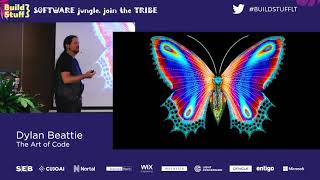
Code goes in, Art comes out

summary
Explains how code produces surprising, coherent art by combining Quil (Clojure) + Processing with selective randomness and emergent rules, shows a recursive triangle subdivision that yields widely different outputs from the same program, demonstrates physical output via an axidraw plotter and Wacom input, surveys agent systems, cellular automata and GANs, claims aesthetics can be encoded partly but requires a human–program collaboration, and shows the workflow works via fast REPL feedback.
AI-written summary · about
chapters (17)
- 0:00Start
- 6:44and clojurescript
- 7:34concurrency management during interactivity
- 8:03do flexible languages encourage creativity?
- 8:50how do you make interesting art solely through programming?
- 10:24is programming predictable?
- 16:39machine learning (neurography?)
- 17:52blending randomness and structure
- 19:35consider color
- 21:39the holy grail: creating an artist
- 22:32why make art with code?
- 24:43be the first to try something
- 24:58immediate visual feedback
- 25:27no tests no documentation
- 26:07explains computers to the world
- 27:48explains the world to us
- 30:09art is part of any healthy culture