Building pi in a World of Slop
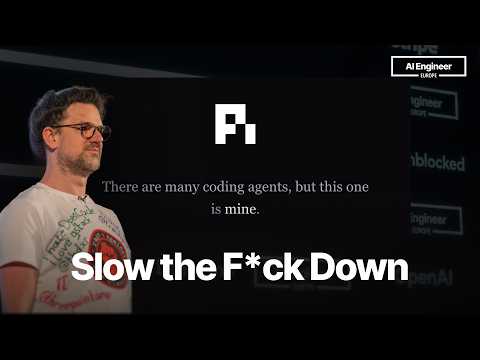
summary
Claims a minimal, self-modifying core that adapts to workflows and exposes only four tools read write edit bash while letting extensions be TypeScript modules hot reloaded live, and reports a Terminal Bench placement (top ten, once sixth) as evidence it actually works. Shows concrete extensions — chat rooms, NES, Doom — and documents how OpenClaw integration creates noise in OSS via automated “clankers.” Ends with concrete rules: scope tasks, review critical code, and slow down.
AI-written summary · about
chapters (11)
- 0:00Intro and motivation for building pi
- 0:29Act 1: Building pi and the frustration with existing agent harnesses
- 1:56Why current context management in tools like Cloud Code and Open Code fails
- 4:44The importance of minimal harnesses and the "Terminal" benchmark
- 5:35Introducing pi: A self-modifying, extensible agent core
- 7:27The "YOLO" security philosophy and extensibility through TypeScript
- 9:03Examples of pi extensions (chat rooms, NES, Doom)
- 10:46Act 2: OSS in the age of "clankers" and how to fight them
- 12:03Act 3: A plea to slow down and stop the "slop" in software development
- 13:58How agents create "enterprise-grade complexity" and why humans are still the bottleneck
- 16:12Practical advice: How to effectively integrate agents into your workflow


