Caching at Netflix: The Hidden Microservice
summary
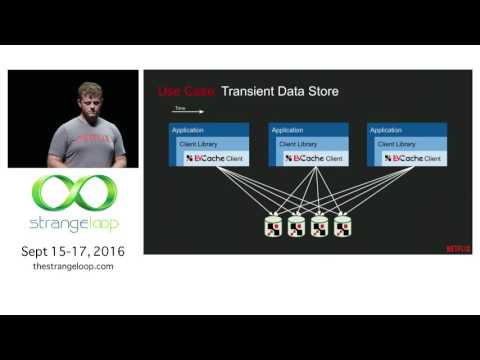
Claims a production caching layer called EVCache holds hundreds of terabytes, serves trillions of operations per day and millions of ops per second across thousands of servers, using Rend, Memcached, RocksDB and Kafka for cross‑region replication and warming. Clients use a Java library and an HTTP/memcached protocol bridge; a Go proxy and an SSD L2 (called Mnemonic in the description) cut costs ~70% for some clusters while keeping server-side GET latency around 230 µs and client latencies usually under 1 ms.
AI-written summary · about
chapters (11)
- 0:00Start
- 4:37Why Do We Want To Optimize for Aws
- 8:18Use Cases
- 8:52Transient Data Store
- 11:20Pipeline of Personalization
- 12:14The Polyglot Story
- 14:49Cache Warming
- 21:09Parallel Locking
- 21:40Ssd Backed Storage
- 25:02Latency
- 28:46Limitations with the Commands That Are Available in the Memcache D Protocol
related talks
 23mReducing gRPC Call Volume Through Caching and Batching
 47mArchitectural Patterns for Caching Microservices
 53mLeveraging Caching For Cloud Native Applications
 50mFast Delivery
 28mHow Netflix Makes gRPC Easy to Serve, Consume, and Operate - Benjamin Fedorka, Netflix
 45mWhere is my cache? Architectural patterns for caching microservices by example
 46mCassandra Serving Netflix @ Scale
 34mAdvanced Caching Patterns used by 2000 microservices