Keynote: Who are we Now?
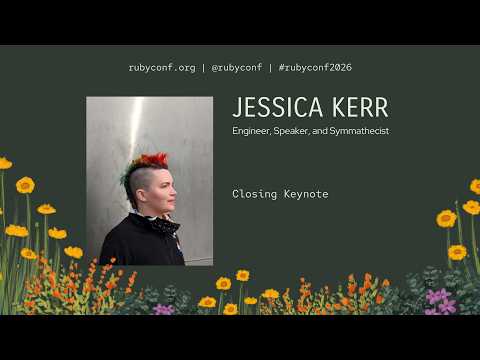
summary
Developers lose intimate ownership of code when agents write it but regain confidence by turning authorship into testable artifacts: unit and Playwright tests, CI checks, observability spans, property tests and even formal verification plus evals/metrics for nondeterministic LLM behavior. Agents excel at “think and try,” so humans own specification, tradeoffs and the middle loop that improves agent context, skills and audits. Legacy work becomes engineering to make code agent-friendly. The shift creates new toil called vigilance toil and rewards teamwork, in‑person alignment and political engagement.
AI-written summary · about
chapters (16)
- 0:00Introduction
- 1:49Vico’s philosophy of verum factum
- 5:20Symmathesy and living code
- 10:20Agents disrupting developer identity
- 13:52Verifactum vs AI verification
- 17:27Vigilance toil and automation
- 21:00Teaching agents with feedback
- 24:54Managing AI teams
- 27:43Shift from coding to AI learning
- 31:55Accelerating change and human connection
- 35:25Vico’s cycles and AI acceleration
- 40:23Pope’s call to remain human
- 44:45Community and work relationships
- 49:00AI responsibility and collective action
- 52:34AI governance and future
- 55:00Q&A
related talks
 31mKeynote: How Software Testing Can Increase Agent Autonomy
 41mKeynote: Is the Developer Lifecycle Dead?
 55mKeynote: Exoskeletons, not Autopilots
 32mKeynote: Architecting Systems for Agent Experience (AX)
 01h 00mKenote: AI Didn’t Replace You. It Promoted You!
 49mKeynote
 23mFrom Writing Code to Designing Systems: How the Developer Role is Changing
 33mKeynote: Boring Wins in AI Agents 🔥 Hard-Earned Lessons