Building Voice-First Android Apps
summary
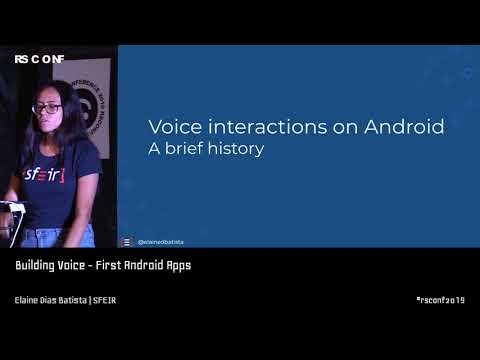
Android provides SpeechRecognizer and TextToSpeech while ML Kit and TensorFlow handle on-device models; Dialogflow, Amazon Lex, Porcupine, Snips and PocketSphinx are the concrete options shown. Demos show hot-word detection works locally with Porcupine, Snips and PocketSphinx but offline NLU gets wrong outside lexicon for embedded models, and Lex requires cloud setup and occasionally misrecognizes time slots. App Actions require deep links and an actions.xml mapping and app actions map deep links via actions.xml and currently live behind developer preview limits.
AI-written summary · about
chapters (7)
- 0:00Start
- 5:18What do I need to do?
- 6:46Two strategies
- 8:47Voice Interactions on Android
- 31:51Development
- 37:39App Actions - Developer Preview
- 40:35Bug Reporting
related talks
 47mBuilding Voice-First Android Apps
 42mThe State of Voice Interactions on Android
 43mThe State of Voice Interactions on Android
 35mHaving a Voice on Android: How hard can it be?
 29mAndroid Gets a Voice: Building Real-Time Agents
 36mVoice Enabling Mobile Apps and Custom Hardware Devices
 15mDicio voice assistant — Libre, multilanguage and offline assistant for Android
 55mConversational power for Android apps