PyTorch in Robotics

summary
Caltech researchers build a neural lander that learns the missing ground‑effect force as a residual dynamics term using least‑squares regression and a small neural network trained in PyTorch, then plugs that predictor into a standard controller. The learned model reduces prediction error from the orange hand‑derived aerodynamic curves to near zero and lets a quadrotor touch down smoothly instead of cutting power and tumbling, demonstrating a working, provably safer landing controller for agile boundary interactions.
AI-written summary · about
chapters (3)
related talks
 49mUsing Deep Learning for Perception in Autonomous Systems: A Perspective from Control Theory
 01h 35mDeep Robotic Learning
 45m(Deep) Learning to Fly
 30mDeveloping Control for Mobile Robots
 21mVisualizing robot minds, and other fun stuff
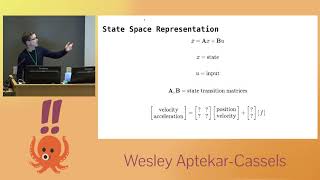 10mRobots, rockets, and more! Control theory in 10 minutes!
 01h 00m(Deep) Learning to Fly
 31mDeep learning for self-driving vehicle technology