Agentic Memory

summary
Argues that adding a persistent memory layer fixes stateless LLMs by storing short-term sessions (retrieve by session ID) and long-term episodic, semantic and procedural memories; episodic entries use quintuples (subject predicate object timestamp description) so time and free‑text capture nuance, semantic memory builds a company graph from documents with role‑based access, procedural memory stores templates and metric definitions for consistent reports, and systems run daily summarization/sleep to compress histories; Neo4j integrates with open frameworks (Cogni, M0, Zap) and Aura/Deployment Center for deployment.
AI-written summary · about
chapters (8)
- 0:00Introduction and welcome
- 1:07Motivation for agentic memory
- 3:41Short-term vs long-term memory
- 8:25Types of long-term memory
- 17:41Semantic memory in business
- 21:37Procedural memory explained
- 25:37Existing agentic memory frameworks
- 26:42Q&A and closing remarks
related talks
 21mBeyond Recall: Creating Agentic Personas with Persistent, Evolving Memory
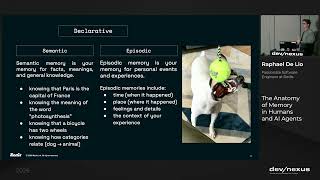 54mThe Anatomy of Memory in Humans and AI Agents
 51mSecrets of Agentic Memory Management
 46mThe Anatomy of Memory in Humans and AI Agents
 47mAgents and Memory Architecture
 25mWhat does it take to build long-term state for AI agents?
 18mArchitecting Agent Memory: Principles, Patterns, and Best Practices
 27mMemory Engineering: Going Beyond Context Engineering