How to Protect Yourself Against XSS Attacks in Java

summary
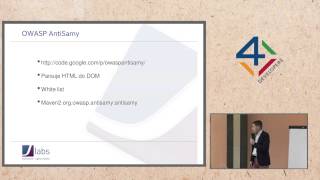
A demo of persistent XSS in Java shows stealing JSESSIONID to take over sessions; XSS is the second-most common web vulnerability (~12.5% of incidents). Recommended defenses are context-aware escaping (different for HTML, JavaScript, CSS), server-side validation with allow-listing rather than blacklists, sanitizing rich HTML into a safe DOM, and keeping framework-specific issues and security patches (JSP/JSF, GWT, Struts, Wicket, Spring) under control.
AI-written summary · about
chapters (11)
- 0:00XSS introduction
- 3:16What is XSS
- 5:29XSS attack demo
- 8:02XSS impact and scale
- 10:11Why data filtering fails
- 13:26Output escaping best defense
- 17:02Secure coding principles
- 22:48Frameworks for XSS protection
- 26:45Web tech security
- 29:20Framework vulnerabilities and XSS sources
- 30:49Summary and Q&A
related talks
 52mSecure Authentication and Session Management in Java EE
 33mJEE Frameworks vs Cross-Site Scripting (XSS)
 52mDemystifying Front-End Security
 52mSecure Authentication and Session Management in Java EE
 57mThe Last XSS Defense Talk
 50mSecure Authentication and Session Management
 34mJS Security - A Pentesters Perspective
 59mWeb Application Security Trends