Why Full-Stack Is the Future of Web Application Development

summary
Argues that full-stack reduces wasted effort by treating frontend and backend as one team one repo one build pipeline, compares four concrete architectures — server-side templates (Django/Laravel/Rails/Thymeleaf), HTML-over-the-wire (HTMX/Unpoly/Livewire), server-side SPA (Next.js/Reflex/Vaadin/Wicket) and full-stack SPA (tRPC/OpenAPI/Hilla) — and shows measurable wins: fewer duplicated validations and DTOs, fewer production-breaking DTO mismatches, and faster end-to-end feature delivery; caveats: true offline apps or rigid org structures still require separate clients.
AI-written summary · about
chapters (7)
- 0:00Introduction
- 3:04History of full stack
- 7:33What is full stack?
- 9:41Full stack architectures
- 20:18Benefits of full stack
- 27:00Common objections
- 37:24Q&A
related talks
 52mWhy Full-Stack Is the Future of Web Application Development
 42mReturn of the Full-Stack Developer
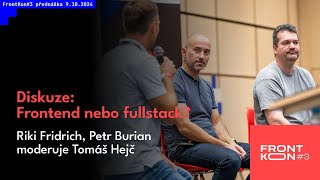 35mDiscussion: Frontend or Fullstack
 45mBe Fullstack, because everyone should
 21mDante’s Inferno of Fullstack Development (A Brief History)
 21mFrontend-centered Development: the Future of Web Development
 40mThe Frontend Is a Full Stack
 01h 10mThe Future of Frontend Panel