Why Full-Stack Is the Future of Web Application Development

summary
Argues that treating frontend and backend as one application speeds delivery: one repo, one build, and a single commit can add an end-to-end feature, avoiding weeks of handoffs for what should be a day of work. Surveys show ~62% of frontend devs already sit with full‑stack teams. Gives concrete options—HTMX, Next.js, Vaadin/Hilla, Livewire, Phoenix LiveView, tRPC and Spring OpenAPI—and claims these reduce API evolution pain, cross‑team bugs and duplicated validation while increasing agility.
AI-written summary · about
chapters (9)
- 0:00Introduction
- 7:16Full stack meaning
- 12:38Full stack approaches
- 25:48Benefits of full stack
- 31:11Objections to full stack
- 44:50Q&A: Server load
- 47:01Q&A: Reusing components
- 48:04Q&A: Microservices
- 49:31Summary
related talks
 41mWhy Full-Stack Is the Future of Web Application Development
 42mReturn of the Full-Stack Developer
 40mThe Frontend Is a Full Stack
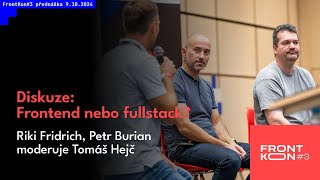 35mDiscussion: Frontend or Fullstack
 19mHarnessing Microfrontends: Platforms for Web Apps
 01h 10mThe Future of Frontend Panel
 21mFrontend-centered Development: the Future of Web Development
 21mDante’s Inferno of Fullstack Development (A Brief History)