Designing a Mixed Reality Game Experience

summary
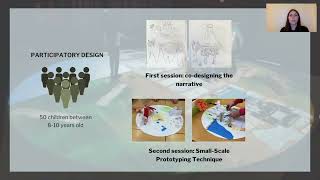
A 6x6m floor-projected mixed reality arena pairs two players with a custom handheld tool and a visible stardust particle logical interface; players activate colored “white holes,” combine particles into algorithmically generated planets, and collaborate to fill orbits so a solar system completes and advances levels. Evaluation uses heat maps and drawing analysis, shows players move closer over sessions and gameplay is well received, but gender bias on aesthetics, one-off storylines, and COVID-limited clinical testing remain unresolved.
AI-written summary · about
chapters (12)
- 0:00Introduction to talk
- 1:10Understanding autism spectrum
- 5:23Key design principles for autism
- 7:32Reality virtuality continuum
- 10:19Game-based social interventions
- 13:09Virtual subjectiveness concept
- 15:35Hardware setup for Lanza
- 17:23Game design for co-creation
- 21:59Testing methods with kids
- 24:02Testing with autism spectrum kids
- 25:06Recap of key points
- 26:11Q&A session
related talks
 30mDesigning a Mixed Reality Game Experience to foster Social Initiation in Children with Autism
 08mParticipatory Design of an Embodied Mixed Reality Experience Aimed to Assessing Individual and Co...
 42mDesigning Engaging VR & AR Games
 39mDesigning for the Living Room: The Spatial Architecture of Mixed Reality
 03mGalaxy Escape: A Game as a Tabletop Holographic Digital Twin Interface
 03mVirtual Real Spaces: In-Home Gaming Experiences Bridging Reality and Virtuality
 44mUX + Mixed Reality
 36mMixed Reality - 3 Axes of Improvement