Measuring Devops Success with Pipeline Analytics

summary
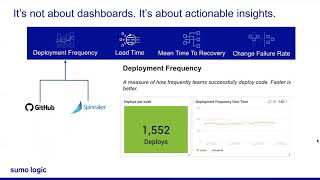
Argues that pipeline analytics must treat the delivery chain as an app, ingesting logs and metrics from Terraform, Vault, Jenkins and repos, correlating commits to ticket numbers, and using DORA metrics plus Flow metrics to quantify value. Recommends collecting lease times, access by policy, deployment frequency, lead time to change, change failure rate and MTTR. Cites a Splunk–Vault–Terraform integration used by customers to surface audit trails and performance issues and to cut build times in half by fixing an environment bottleneck.
AI-written summary · about
chapters (11)
- 0:00Introduction
- 2:50What do we see in most organizations
- 4:14Accountability
- 5:28Connecting the Dots
- 7:30No Code Ships
- 12:38Monitoring
- 14:28Purpose
- 14:45Compliance
- 16:12Value of Good
- 18:55Choose Your Measurement
- 23:29Cost of Downtime
related talks
 33mMeasuring Developer Efficiency in DevOps: Key Questions, Metrics, Best Practices
 42mData-Driven DevOps
 33mMeasuring DevOps
 55mPatterns & Anti Patterns for Scaling & Enabling DevOps Adoption
 27mBenchmarking and Optimizing Software Delivery Performance
 28mThe DevOps Pipeline
 31mElevating DevOps with Integrating Analytics into CI/CD Pipelines
 45m200 Teams, 1 Goal: DevOps Maturity at Scale