Using Vault with a Laravel App in OpenShift
summary
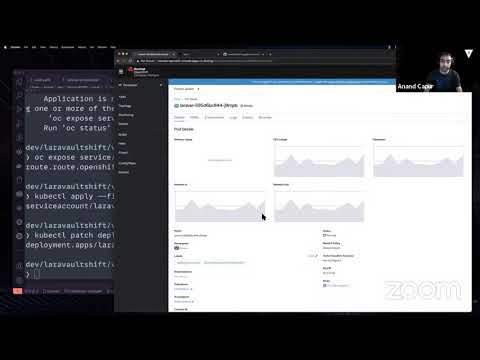
Deploys Vault via Helm on OpenShift, enables the Kubernetes auth method, and uses a Vault Agent sidecar injected by a mutating admission webhook to render secrets to an in-memory volume that a stock Laravel app reads via a symlinked .env. Creates policy/role/service account, stores an app key, and adds dynamic MySQL credentials with a short TTL; the init container seeds secrets and the long‑running agent refreshes them automatically — demo works end to end.
AI-written summary · about
chapters (13)
- 0:00Start
- 3:25Deploying a Laravel App
- 3:55Overview
- 6:06Deploy and Configure Vault in Our Openshift Cluster
- 7:37Install Vault
- 8:27Configure Vault
- 9:19App Key
- 12:24Annotations
- 12:35The Vault Agent Injector
- 18:11Deploy a Mysql Server
- 18:29Deploy a Simple Mysql Server
- 18:49Configure Vault for Dynamic Secrets
- 19:22Create the Role
related talks
 20mEvolving Kubernetes security with Vault and OpenShift
 32mIntegrating HashiCorp Vault and K8s Apps - No Code Changes Needed
 42mDynamic credentials for Kubernetes workloads with Vault and VSO
 48mEffortless Secrets Management in Kubernetes
 28mSelf-Service Vault in Kubernetes
 23mVault for Secrets Management and TLS in Consul K8s
 01h 03mSecuring Legacy Applications and Container Microservices in Kubernetes
 49mUsing HashiCorp Vault with Kubernetes