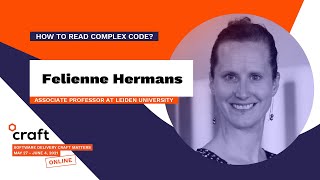
How to Read Complex Code?

summary
Developers spend 58% of their time reading code and 85% learned programming before 19, so reading is a skill not a pastime. Cognitive limits (Miller’s 5–9 items) explain why unfamiliar syntax (APL), boilerplate (Java), or tangled state (BASIC) confuse differently. Practical tactics: build syntax fluency with flash cards, offload working memory with a state table, practice reproduction and summarizing code, and run a regular code reading club to train long‑term models and spot where understanding actually breaks.
AI-written summary · about
chapters (19)
- 0:00Intro
- 0:39How I got started
- 3:32Coding for kids
- 4:42The best part of programming is finding mistakes
- 5:16Programmers only learn from making mistakes
- 5:50You will fail often & it will be frustrating
- 6:44Never be afraid to mess around & experiment
- 7:06Break the rules
- 7:53And most importantly: it's fun
- 9:11When & how do you learn to code?
- 11:55How do people learn?
- 12:40We don't teach reading code
- 15:10We don't practice reading code
- 17:02We don't have theories for reading code
- 21:44Different forms of confusion
- 27:40More techniques from reading
- 29:42Want to know more?
- 31:13Summary
- 32:25Outro