Machine Learning with Scikit-Learn and Xgboost on Google Cloud Platform

summary
Covers concrete recipes: use Natural Language API tokenization to split Japanese text (demo fixes space-splitting failure), pull Hacker News headlines from BigQuery into Jupyter, and run Scikit‑Learn pipelines or swap in XGBoost for training. Recommends large Compute Engine instances — including 4 TB RAM VMs and NVMe SSDs — to avoid premature distribution for 50M rows/month (≈1B points over two years). Shows exporting joblib models to Cloud ML Engine, deploys a Scikit‑Learn version in under a minute, and serves via REST with autoscaling (including scale-to-zero).
AI-written summary · about
chapters (17)
- 0:00Intro
- 0:44Python for data science and ML
- 6:35Preprocessing unstructured data is hard
- 8:05Tokenizing sentences
- 12:40Scaling challenges
- 16:20Financial time series forecasting
- 16:56Machine learning vs large data
- 23:00Scaling up
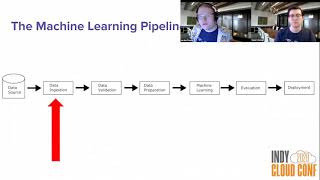
- 25:18Simple case study: market data ingestion (1)
- 26:11Simple case study: market data ingestion (2)
- 26:44Simple case study: market data ingestion (3)
- 27:55Takeaways
- 30:22Compute Engine burst training
- 40:02Fraud detection
- 41:31Data processing
- 41:44Fast data access
- 41:56Big data storage
related talks
 32mMachine Learning with Google Cloud Platform
 29mML Ops on Google Cloud Platform
 40mCloud-based Machine Learning Offerings - Beginner's Perspective
 27mKeynote - Google Cloud, Machine Learning
 43mMachine Learning at Scale
 31mProductionizing ML with ML Ops and Cloud AI
 42mMachine Learning APIs, from Training [...]
 31mProductizing Machine Learning over Big Data with AWS tools