Stress-Testing the Open Source Definition

summary
The Open Source Definition faces two concrete stresses: vendor-facing licenses that block cloud competition and ethical-use clauses that ban certain fields of endeavor. Examples: the Commons Clause forbids selling the software; the Elastic License forbids offering the software as a hosted service; MongoDB’s SSPL copies AGPL3 but adds a broad Section 13 that forces providers to open management, hosting and automation code, prompting OSI rejection and distro refusals. Historical precedents (Sun community source, Microsoft shared source) and GPLv2/v3 ambiguities show the boundary between “open source” and “open-source-like” remains contested.
AI-written summary · about
chapters (13)
- 0:00Intro
- 2:25What is the open source definition
- 7:20The history of the open source definition
- 9:38Defending the open source definition
- 13:00Limiting competition
- 14:47Commercial uses of software
- 15:14Elastic License
- 18:29MongoDB Serverside Public License
- 20:48Open Source Rule 9
- 22:42The Argument Against Ethical Licenses
- 26:39The Open Source Application
- 27:52Gay Marriage
- 31:14Question
related talks
 31mUpdate on licensing - "not really" open source licenses
 30mWhat is Open Source?
 30mOpen Source Licensing: Use Versus Abuse
 57mWhat You Need to Know About Open Source—Trust Me, I'm a Lawyer
 29mOpen Source: from Revolution to Evolution
 42mOpen Source at a Crossroads
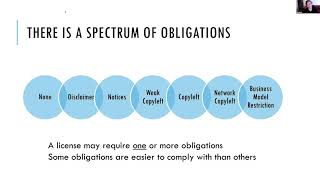 01h 38mOpen Source Licensing: Types, Strategies and Compliance
 01h 11mWhat You Need to Know About Open Source—Trust Me, I'm a Lawyer