Chaos Stack: Designing Layered Tabletop Exercises for Complex Crisis Simulation

summary
Chaos Stack is a layered, time‑sequenced tabletop method that injects injects every 5–10 minutes across cyber, legal, operations and PR so teams face competing priorities and decision interdependency. It uses practical artifacts—timeline and facilitator guide, a scenario builder and a reusable template—and tests with about ≤20 participants, one to two facilitators plus a scribe, ~5–10 hours prep and a ~2‑hour exercise. Real examples include a ransomware day with 5,000 rogue user accounts and EDR bypass; the model reliably exposes communication, escalation and playbook gaps.
AI-written summary · about
chapters (24)
- 0:00Layered tabletop exercises intro
- 1:02Traditional exercises limits
- 2:08What is Chaos Stack
- 3:51Why real incidents demand messy simulations
- 5:18Crisis communication chaos
- 8:06Cyber incident in 24 hours
- 9:11Chaos Stack exercise structure
- 10:59Layered scenario design pillars
- 12:45Exercise format and timing
- 13:29Example scenario walkthrough
- 18:07Realistic crisis exercise elements
- 19:32Chaos Stack design framework
- 20:36Decisions to consequences mapping
- 22:48Pivoting during exercises tips
- 23:30Meaningful consequences design
- 24:16Next Chaos Stack exercise
- 25:53Chaos Stack simulation goals
- 27:37Templates and resources
- 29:29Q&A: Facilitator team
- 31:16Q&A: Evaluating results
- 33:02Q&A: Optimal participant count
- 34:07Q&A: Exercise prep and length
- 36:57Q&A: Playbooks or gaps first
- 38:28Closing remarks
related talks
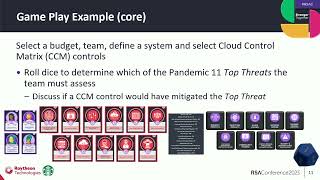 49mCloud Threat Gamification: Lessons Learned and How to Set One Up
 32mHow to Orchestrate a Cyber Security Incident Tabletop Exercise
 23mBring Chaos to Your Org
 17mPremiere
 15mIncident Ready: Chaos Engineer Your Incident Response
 59mBackdoors & Breaches: Live Tabletop Exercise Demo
 32mAre you hesitant to run chaos experiment...
 01h 08mBackdoors & Breaches: Live Tabletop Exercise Demo