Building Scalable Web Apps
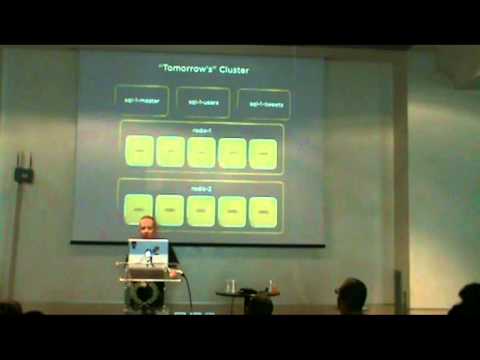
summary
Uses Django with frozen requirements and setuptools packaging, powers a Twitter clone with Postgres primary store (Discuss hits ~3 billion page views and peaked ~25,000 req/s). Pushes state into Redis sorted sets, truncates timelines older than 30 days, and shards predictably into 64 nodes via ntis. Writes fan-out work to Celery/RabbitMQ workers, keeps one canonical object cache per ID, avoids DB triggers, prefers range queries over LIMIT/OFFSET, and treats queues and materialized views as the scaling levers.
AI-written summary · about
chapters (10)
- 0:00Introduction
- 1:47Scalability vs performance
- 3:11Common bottlenecks
- 10:59Database design
- 17:40Redis caching
- 25:07Task queues
- 35:22Refactoring for consistency
- 37:51Architecture best practices
- 43:27Scaling strategies
- 46:18Q&A
related talks
 28mBoosting Python Web Apps performance with Celery and Concurrency
 47mReal World Django Q&A
 29mSwiss Army Django: Small Footprint ETL
 39mHigh Performance Django: From Runserver to Reddit Hugs
 42mA Nice Problem to Have: Django Under Heavy Load
 31mHigh Performance Django
 32mSqueezing Django performance for 14.9 million users on WhatsApp
 41mProduction Django: Building a Highly Scalable, Secure Django Site