Using Linux as Long Term Working with the Community

Talkat Embedded Linux Conference + OpenIoT Summit North America 2017 · on Tuesday, 2017-02-21· at 10:30· Skyline II·
summary
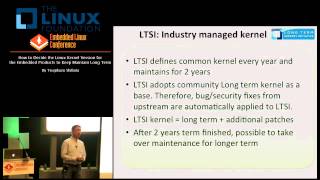
Explains how the Linux kernel community and industry coordinate around long-term support (LTS) kernels, using the 2015 decision to make 4.4 an LTS release as a concrete example of timing and confusion it caused. Covers collaboration processes for maintaining long-term kernels and describes the LTSI release plan and its release process.
AI-written summary · about
chapters (18)
- 0:00Start
- 1:25Linux is running everywhere
- 5:15Kernel release cycle
- 7:20Linux Development process
- 8:39Linux Source Code Growth
- 9:09Rapid Release cycle of Linux
- 10:16Stable kernel release
- 12:35LTS: Long Term Stable Kernel
- 14:04Current LTS versions
- 19:06What is LTSI • Open Source community to create and maintain Linux kernel for long term
- 21:28History of LTSI Established 2011-6 years now
- 26:39Upstream first policy
- 28:06Production kernel
- 30:12LTSI development process
- 31:15LTSI 2017 Development plan
- 34:13Tech Challenges for kernel area
- 37:53LTSI related project and use case
- 40:39Conclusion
related talks
 48mStep by Step, What Should We Do for the Kernel Ecosystem?
 39mUsing Long Term Stable Kernel for the Embedded Products
 41mChoosing Linux for New Use Cases
 27mActivities of Super Long Term Support Kernel Workgroup in Civil Infrastructure Platform Project
 34mHow to Decide the Linux Kernel Version
 41mChallenges Around Long-Term Kernel Maintenance
 39mTowards Sustainable Systems with the Civil Infrastructure Platform
 26mKeynote: Linus Torvalds in conversation with Dirk Hohndel