Implementing Multi-Login
summary
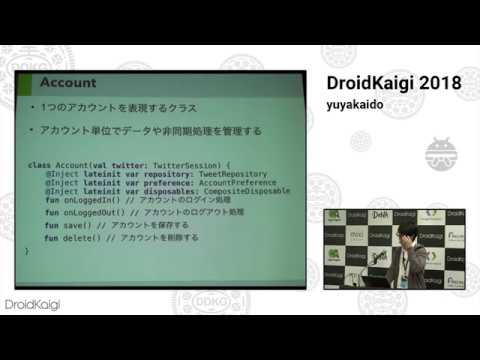
Shows how to implement multi-account login by scoping repositories, Retrofit clients, and preference storage to each account so switching never leaks or overwrites data. Uses Dagger to create per-account dependency-injection containers, Retrofit plus the Twitter SDK for API calls, and a CompositeDisposable per account to cancel or ignore late responses; persistent storage is handled with per-account SharedPreferences. Includes a working sample: a multi-account Twitter client demonstrating these techniques.
AI-written summary · about
chapters (7)
- 0:00Start
- 0:43Self-introduction
- 10:28Design Policy for Multi-Login Implementation
- 13:31Instance Management
- 23:46App Launch
- 24:39Adding an Account
- 27:27Summary
related talks
 36mTesting: how hard can it be?
 19mBuilding Managers Over 3rd Party SDKs for Easy Access
 23mBuilding a Delightful (Enterprise Grade) Login Experience
 37mAvoid the mess! Clean up your data repository
 47mMonolithic application, it's not automatic
 22mReactive, Clean Architecture and Android Architecture Components, a solid formula for a MVVM based a
 40mClean, Easy & Stable Android Architecture
 29mDIY Dependency Injection with Kotlin