"10 Feet and Rising: Building Television-Friendly Webpages"
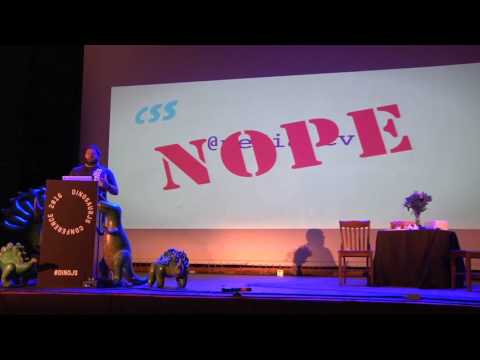
summary
An office deploys wall TVs and turns them into real-time signage by building Corsica plugin system that uses websockets and iframes; content rotates every two minutes and users push slides, memes or a "puppy button" from a tablet (the puppy feature meaningfully boosts morale). Practical advice: treat TVs as ten-foot UI devices — use viewport units, tabindex and strong focus states — and deliver content via Chromecast (requires app registration), Raspberry Pi/HDMI, mdns (Fly Web), DIAL, WebRTC or Bluetooth depending on latency and discovery needs.
AI-written summary · about
chapters (13)
- 0:00Introduction and background
- 1:50Office TVs and early experiments
- 3:15Corsica and digital signage system
- 6:04Designing for ten-foot UI
- 8:34Detecting TV displays
- 10:16Accessibility for TV users
- 11:43Browsers on smart TVs
- 13:10Chromecast and Fire TV apps
- 14:57Raspberry Pi as TV browser
- 15:19Interacting with faraway screens
- 19:11Why experiment today
- 20:54Advocating for TV web standards
- 21:34Q&A on TV-first experiences
related talks
 21mDesigning for displays that don't exist yet
 48mContext, multi-device and the future of TV in the browser
 44mJavaScript powered TVs!?
 42mCreating Multi-Screen Installations with Web Technologies
 35mReactive Television
 25mFor a Future-Friendly Web
 56mClosing Panel: "HTML5 and Devices"
 57mFast Web on a Budget TV Set-Top Box with React & Styled Components