Choreography vs Orchestration in serverless microservices

summary
Compares an event-driven Picadilly app (Cloud Storage, Cloud Functions, Cloud Run, Pub/Sub, Eventarc, Cloud Scheduler, Vision API, Firestore) with a Google Cloud Workflows rewrite that starts from a storage event and orchestrates vision calls, metadata writes, thumbnail and collage services. The rewrite eliminates two functions, collapses three event formats into a single HTTP format, reduces setup and code, and makes failures visible — workflows shows the failing step — while trading off YAML testing/debugging and lacking parallel steps at the time. Executions run successfully in the demo.
AI-written summary · about
chapters (11)
- 0:00Intro
- 2:22Imagine a simple e-commerce transaction
- 3:49Simple REST: Pros and Cons
- 5:46Choreography (event-driven)
- 6:40Choreography: Pros and Cons
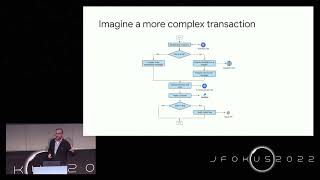
- 9:31Imagine a more complex transaction
- 11:12Orchestration: Pros and Cons
- 15:39Hybrid approach
- 18:51CNCF Serverless Workflow
- 27:57Choreographed (event-driven) architecture
- 38:02Lessons Learned
related talks
 46mChoreography vs Orchestration in serverless microservices
 49mChoreography vs Orchestration in serverless microservices
 51mChoreography vs Orchestration in serverless microservices
 01h 03mChoreography vs Orchestration in serverless microservices
 38mChoreography vs Orchestration in serverless microservices
 50mChoreography vs Orchestration in serverless microservices
 32mChoreography vs Orchestration in serverless microservices
 46mChoreography vs Orchestration in serverless microservices