Managing APIs using Cloud Endpoint on GKE
summary
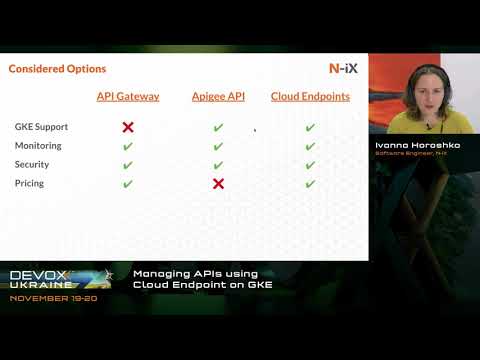
Compares three GCP options and shows a working setup: API Gateway is serverless-only so it cannot front GKE, Apigee meets needs but fails the team’s budget, and Cloud Endpoints runs an ESP sidecar inside pods to validate, auth and collect metrics. Explains exposing endpoints via GKE Ingress (requires nodePort and public node IPs) versus Google HTTPS Load Balancer with network endpoint group and vpc-native cluster so nodes stay private; demonstrates url‑map path routing and rewrite and confirms monitoring works though metrics lag.
AI-written summary · about
chapters (9)
- 0:00Introduction and setup
- 2:04Kubernetes basics overview
- 8:26Problem statement and requirements
- 12:43Cloud Endpoints introduction
- 20:10Cloud Endpoints architecture
- 24:01Kubernetes Ingress explained
- 30:10VPC native clusters and load balancers
- 42:57Solution comparison and recap
- 46:08Live demo and Q&A
related talks
 29mGateway API: The new Kubernetes Ingress that Unifies Load Balancing and Network Configs
 14mMulti-cluster, Blue-green Traffic Splitting with the Gateway API
 29mManaging APIs with Kong and Kubernetes on Google Cloud Platform
 21mExposing gRPC With Confidence: A Kubernetes-First API Gateway Approach
 32mThe Past, Present and Future of Cloud Native API Gateways
 01h 00mGateway API: Basics, Nuance, and the Real World
 28mBeyond Kubernetes Ingress (with Gateway API)
 06mGet To Where You're Going With Kgateway