Choreography vs Orchestration in serverless microservices

summary
Photo-sharing app moves from messy event-driven wiring (Pub/Sub/Eventarc plus Cloud Functions, Cloud Run, Firestore, Vision API) to a central orchestrator using Google Cloud Workflows, which defines steps, retries, timeouts, and connectors. Result: fewer services and less glue code, declarative error policies, single JSON flow between steps, and easier tracing of failed steps; tradeoffs are reduced plug‑and‑play flexibility and dependence on the orchestrator as a service. Demo shows thumbnails, ML labels, and scheduled jobs implemented via workflow steps.
AI-written summary · about
chapters (18)
- 0:00Intro
- 1:53Imagine a simple e-commerce transaction
- 3:40Simple REST: Pros and Cons
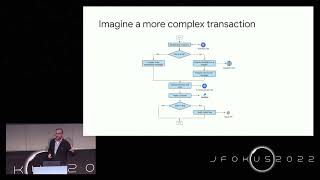
- 6:14Imagine a more complex transaction
- 8:00Choreography: Pros and Cons Pros
- 13:06Orchestration: Pros and Cons
- 17:12It depends...
- 19:40Hybrid approach
- 23:22Choreography (event-driven)
- 26:22CNCF Serverless Workflow
- 34:31Steps
- 35:06Errors and retries
- 36:31Conditionals and 3rd party calls
- 37:04Other useful features Subworkflows
- 42:40Choreographed (event-driven) architecture
- 43:563 different event handling approaches
- 45:07Orchestrated architecture
- 47:11Lessons Learned
related talks
 46mChoreography vs Orchestration in serverless microservices
 01h 03mChoreography vs Orchestration in serverless microservices
 49mChoreography vs Orchestration in serverless microservices
 50mChoreography vs Orchestration in serverless microservices
 46mChoreography vs Orchestration in serverless microservices
 38mChoreography vs Orchestration in serverless microservices
 50mChoreography vs Orchestration in serverless microservices
 32mChoreography vs Orchestration in serverless microservices