Building With Zero Trust Architecture

summary
Claims that remote work drove a shift from perimeter trust to continuous verification, citing a ~125% rise in cyber attacks and an average data‑breach cost around $4M. Architecture presented splits a data plane (data, apps, infra) and control plane (telemetry, policy engine, threat protector) and recommends KMS/secure enclaves, cloud binary authorization, encryption, data labeling, and MFA (quoted ~96% reduction in compromise). Practical controls are just-in-time access and just‑enough privileges, policy controller + telemetry to auto‑revoke risky sessions; no large deployment case study is shown.
AI-written summary · about
chapters (12)
- 0:00Start
- 5:42Encryption
- 11:49Policy Engine
- 12:44Policycontroller
- 24:11What Are the Things That Is Required To Make this Zero Trust Model More Effective
- 24:39Verifying and Enforcing
- 25:09Resolve Incident Stage
- 26:23Hero Stage
- 28:42Data Labeling
- 29:02Proactive Data Governance
- 29:49Best Practices
- 29:59Never Assume Roles or Privileges
related talks
 18mRedefining Cybersecurity: Harnessing Zero Trust Architecture for a Resilient Future
 19mBeyond Perimeters: Implementing Zero Trust at Enterprise Scale
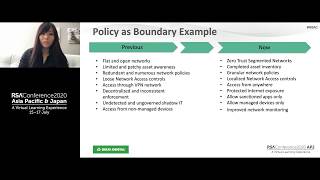 27mA Simplified and Practical Approach to Pursuing a Zero Trust Architecture
 02h 48mZero Trust: the new normal!
 40mZero Trust: Regaining Trust in a Remote Work World
 45mZero Trust: Getting to Step One..and What to Do When You Get There
 26mZero Trust: Continuous Verification in the Modern Enterprise
 40mZero Trust, Zero Pain: A Practical Implementation with Intrinsic Security