Understanding Amazon Alexa
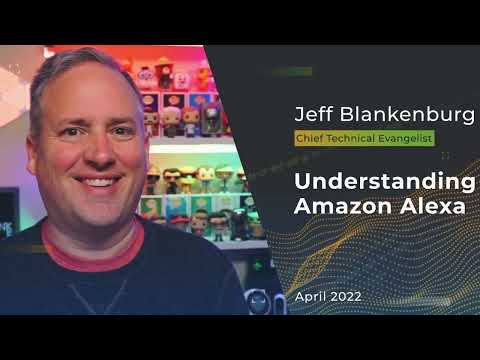
summary
Demo unpacks Alexa internals: wake word triggers on‑device capture, STT maps phonemes to text, NLU resolves intents into a JSON payload sent to a backend, and replies use TTS or screen directives. Shows the Developer Console workflow: invocation name, custom slots/types, utterance profiler and NLU unit tests, editing the interaction model JSON, and local debugging via VS Code. Uses alexa hosted node or any HTTPS endpoint (AWS Lambda common), mentions free tier ~1M invocations/month, and SSML with SSML phonemes and audio assets.
AI-written summary · about
chapters (14)
- 0:00Introduction to Alexa
- 1:05Speaker introduction and background
- 2:07What is an Alexa skill
- 3:09Voice vs traditional applications
- 7:18How Alexa processes voice commands
- 13:56Alexa Developer Console walkthrough
- 20:58Setting up invocation name and intents
- 27:57Building custom intents and slots
- 33:07Testing and unit evaluation
- 39:24Coding the skill backend
- 45:17Testing the skill in the console
- 51:38Advanced features and SSML
- 55:55Local debugging with VS Code
- 1:04:10Publishing and beta testing skills
related talks
 01h 05mUnderstanding Alexa
 42mConversational AI in Amazon Alexa
 44mDelivering On The Promise Of Voice With Alexa
 19mAmazon wants to talk to you
 52mThe most natural UI. Building voice-enabled experiences with Amazon Alexa
 43mBuild Voice-Enabled Experiences
 15mDesigning Voice User Interfaces for Amazon Alexa
 31mCool things to do with Voice Interfaces (and lots of things you shouldn't)