Modelling vs Reality

summary
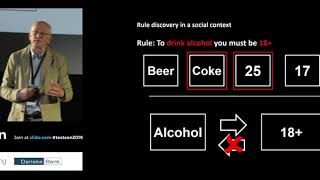
Argues that everyday categories and precise models systematically diverge: cognition uses prototype vs classical models and basic-level categories, producing graded membership, non‑transitive judgments and many edge cases; technical modeling (laws, software types) forces precision and provokes an explosion of near‑duplicates, accumulated assumptions and inertia. Uses cognitive experiments, taxonomy examples (apes, tomatoes, penguins), and welfare‑law clauses to show that precision comes at a cost and that edge cases become regular cases requiring explicit design choices.
AI-written summary · about
chapters (11)
- 0:00Modeling vs reality
- 3:50Folk theory of categories wrong
- 16:35Categories in the human brain
- 22:35Categories in practice vs reality
- 33:16Categories and hierarchies
- 43:40Transitivity and messy categories
- 48:41Category boundaries in software
- 51:10Technification of categories
- 55:29Cost of assumptions and debt
- 58:17Designing technical categories
- 1:00:03Conclusion and Q&A
related talks
 38mCognitive Linguistics at the Sharp End
 33mCognitive Shortcuts: Models, Visualizations, Metaphors, and Other Lies
 01h 01mDesigning for complexity
 01h 06mPsychology & Design
 11mCarpenters and Cartographers
 52mMental Models, Complexity and Software
 09mTalks with Brian Troutwine about His Code Mesh Talk
 43mReasoning Skills within Software Testing