Reasoning Skills within Software Testing
summary
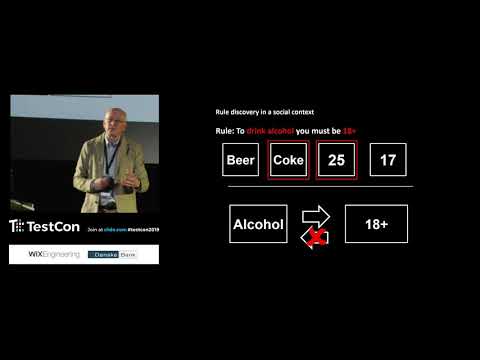
Claims that testers confuse logical (indicative) problems with social (deontic) ones and that evolution explains why: dominance theory, theory of mind and error management drive biases. Empirical specifics include the Wason task results: 46% choose A and 32% choose A and 4, while only 4% choose 4 and 7, showing typical confirmation bias. Examples include the beer/bar and pension framings, Watson’s number sequence tests, and a call to build a community to study and mitigate these cognitive errors.
AI-written summary · about
chapters (15)
- 0:00Introduction
- 0:22Reasoning skills in testing
- 1:03Vowel-number card puzzle
- 5:43Barroom social contract test
- 7:31Barroom vs card puzzle
- 9:17Social contexts for reasoning
- 10:00Pension fund rule testing
- 12:37Social framing and reasoning
- 13:01Indicative and deontic reasoning
- 14:49Dominance theory in reasoning
- 22:56Theory of mind in reasoning
- 27:12Error management and biases
- 33:37Confirmation bias in testing
- 37:09Downsides of social reasoning
- 38:11Improve reasoning in testing
related talks
 29mOn How Your Brain is Conspiring Against You Making Good Software
 07m“Biases Driving 5 Misconceptions that Testers Face”
 01h 02mCognitive biases in software development
 39mHow Cognitive Biases Affect our Software Architectures
 31mUnderstanding Cognitive Bias Found In Judgement & Choice
 07mSAG Expert Interview #02: How Cognitive Biases Impact Software Architecture
 38mCognitive Bias: A reflection and path forward
 01h 00mCognitive biases in software development